How to Run Efficient Team Meetings in Dental Practices | Improve Productivity & Accountability
Learn how to run efficient team meetings in dental clinics using structured agendas, measurable outcomes, and accountability systems to improve team productivity
How to Run Efficient Team Meetings: Turning Discussion into Measurable Action in Dental Practices
Dental clinics often face a common operational challenge: how to run efficient team meetings that truly move the practice forward. Many meetings feel repetitive, unproductive, or disconnected from daily workflows, consuming valuable time without delivering meaningful outcomes.
This is a widespread issue across industries. Research shows that 56% of employees believe meetings are a waste of time, and ineffective meetings significantly reduce productivity and engagement.
Efficient team meetings are not about talking more—they are about creating structured systems that turn discussion into measurable action. By treating meetings as a system supported by structure, metrics, and accountability, dental practices can transform them into powerful tools for improving communication and operational performance.
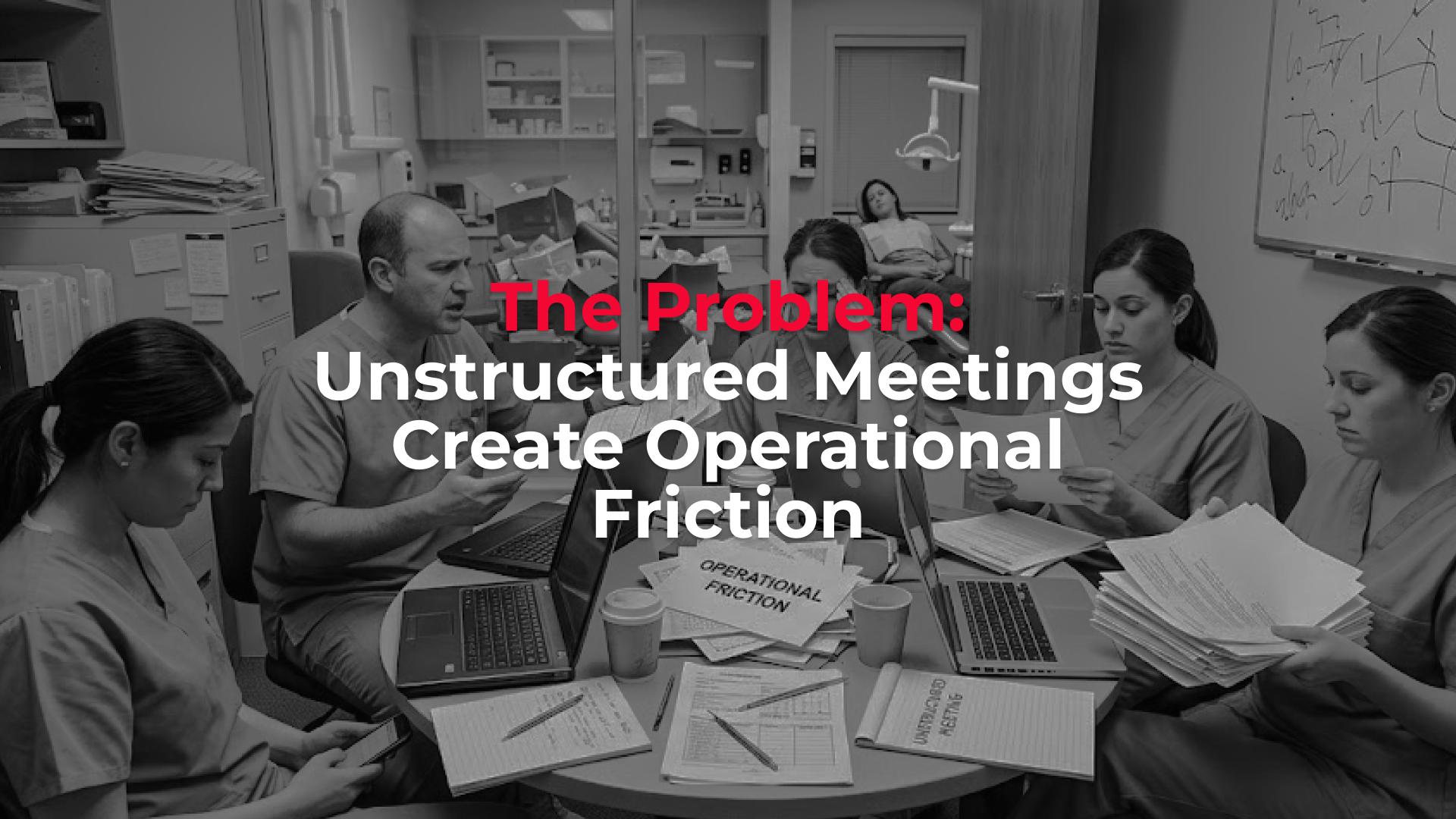 The Problem: Unstructured Meetings Create Operational Friction
In many dental clinics, meetings lack clear agendas or defined outcomes. Conversations drift, decisions are delayed, and follow-up actions are often forgotten. This creates operational friction that slows progress on key goals such as patient retention and workflow efficiency.
This inefficiency is widespread, with studies showing that only about 11% of meetings are considered productive, highlighting the need for better structure and execution.
Practices can reduce this friction by focusing on improving dental practice efficiency through structured workflows, ensuring meetings align with daily operations and measurable outcomes.
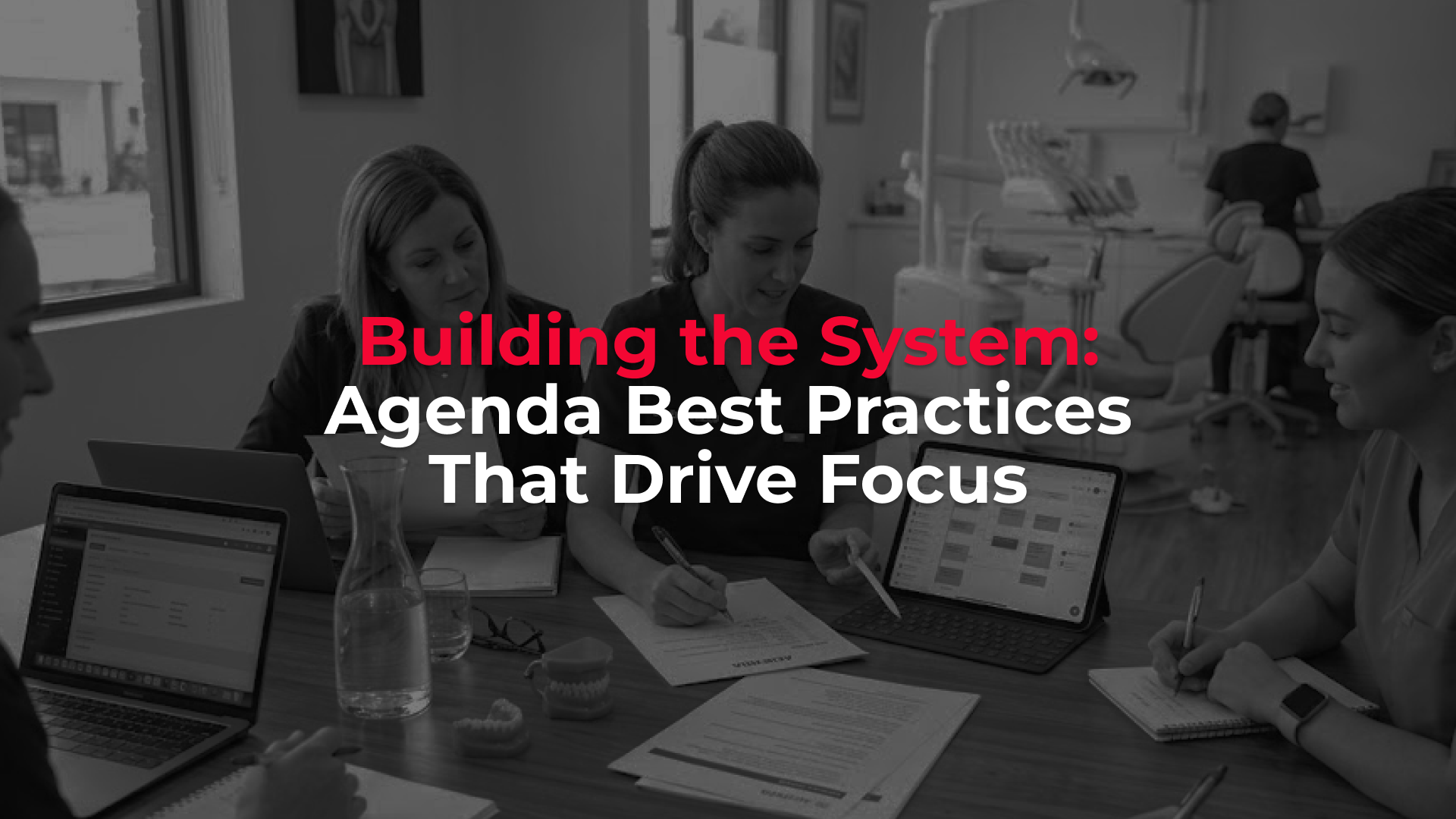 Building the System: Agenda Best Practices That Drive Focus
The foundation of an efficient meeting is a well-defined agenda. A structured agenda acts as a roadmap that keeps discussions focused and aligned with outcomes.
However, research shows that only about 37% of meetings have a clear agenda, which is a major cause of inefficiency.
Effective agendas also support broader operational improvements, aligning with strategies used in reducing administrative overhead in dental practices, where structured processes eliminate unnecessary work. . Sharing the agenda in advance allows team members to prepare, resulting in more focused and productive conversations.
A dental practice that implemented structured agendas with time allocations reduced meeting duration while increasing actionable outcomes—demonstrating how small structural changes can significantly improve efficiency.
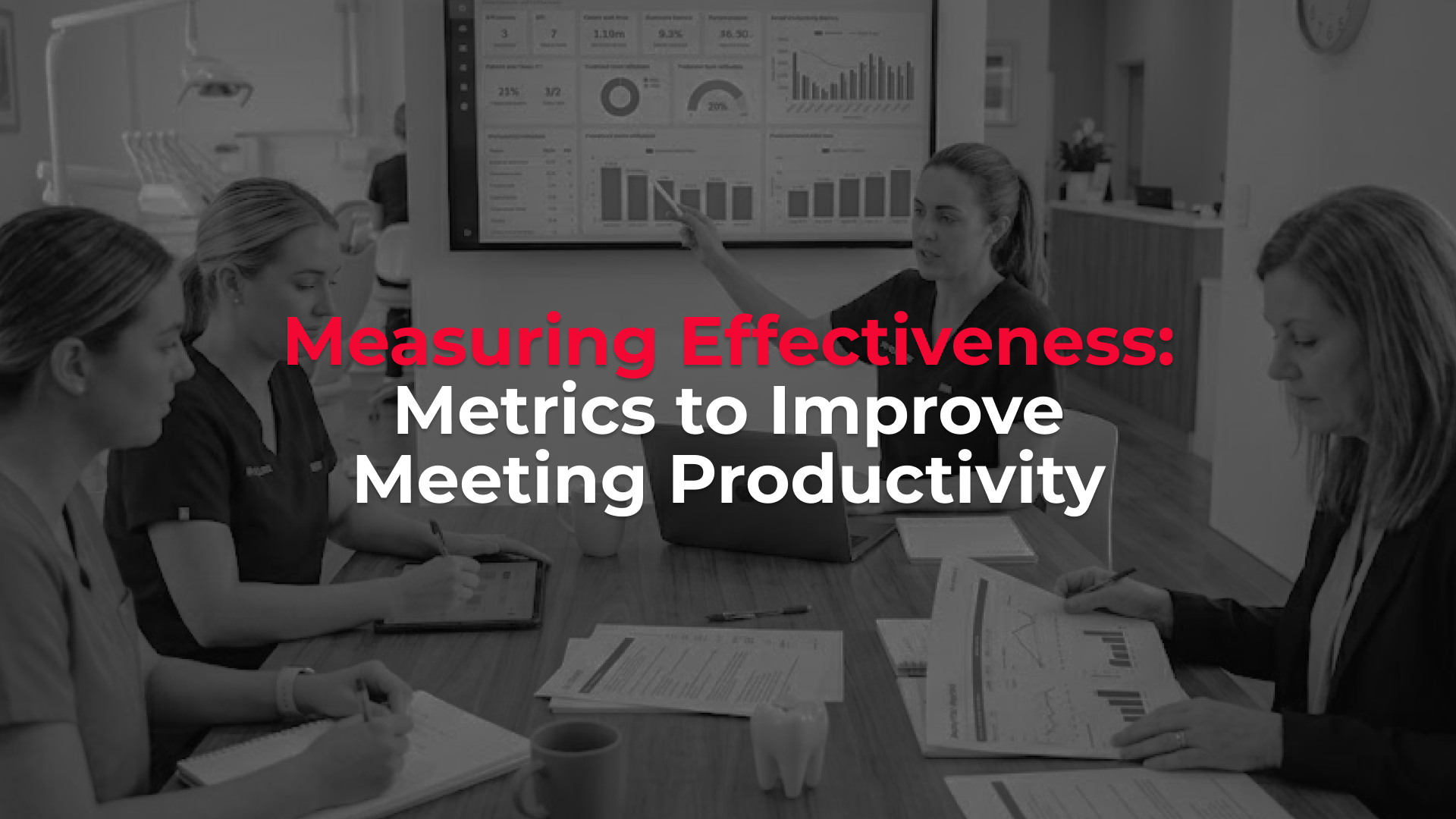 Measuring Effectiveness: Metrics to Improve Meeting Productivity
Without measurement, meeting effectiveness cannot be improved. Tracking meeting productivity through measurable indicators provides clarity and enables continuous optimization.
Metrics such as agenda completion rate, time spent on key topics, and follow-up task completion help leaders understand whether meetings are delivering value.
Research shows that effective meeting processes are directly linked to higher team productivity and long-term organizational success.
By incorporating meeting effectiveness metrics into regular reviews, dental practices can move from subjective discussions to data-driven performance improvement.
Practices can strengthen decision-making by leveraging data-driven dental practice analytics, ensuring meetings are aligned with performance metrics and real outcomes.
Additionally, tracking dental practice KPIs and performance metrics helps connect meeting discussions to business results.
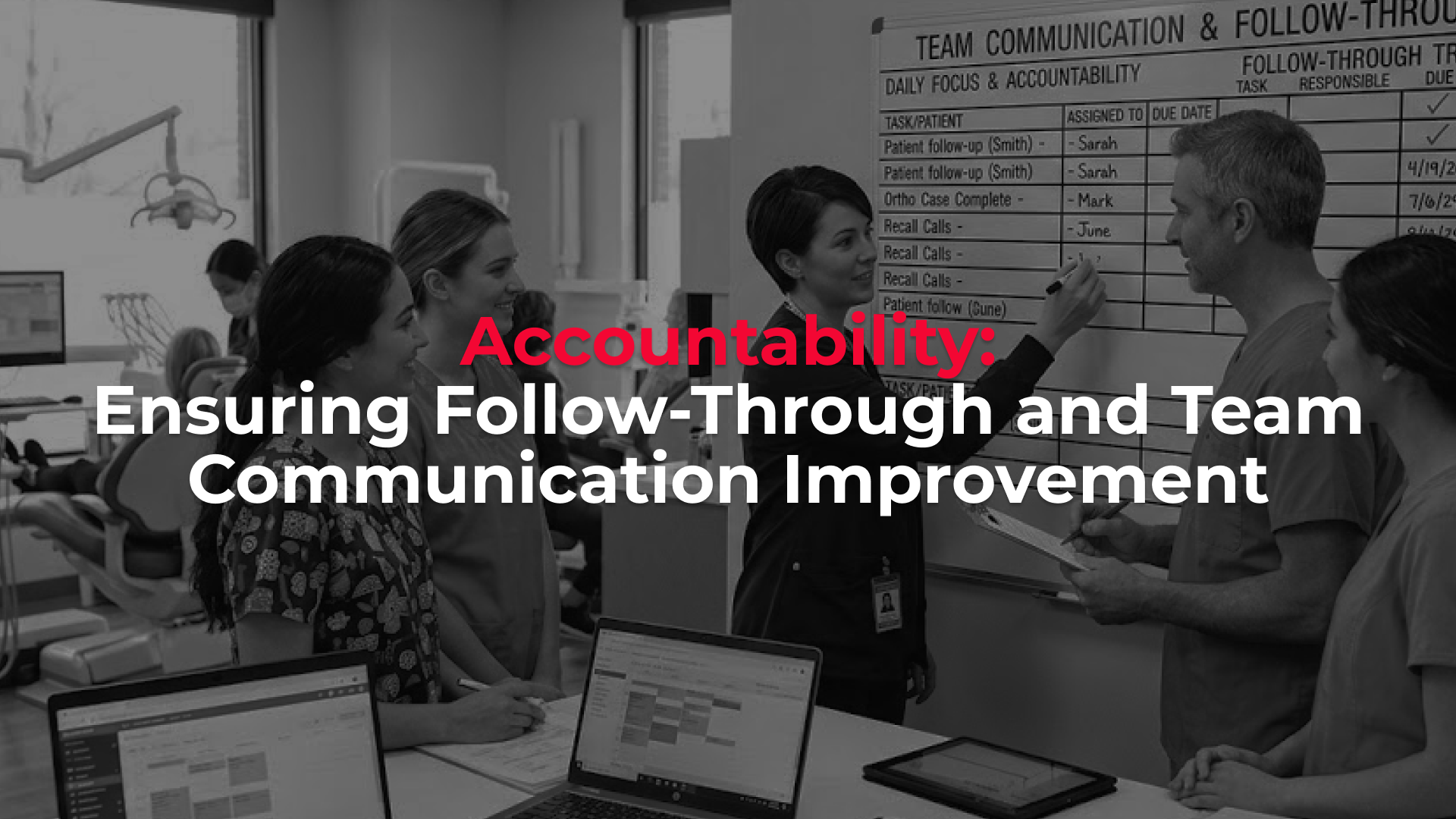 Accountability: Ensuring Follow-Through and Team Communication Improvement
Accountability is the most critical element of efficient meetings. Without clear ownership and follow-through, even well-structured meetings fail to produce results.
Assigning specific owners to each action item and setting clear deadlines ensures that decisions translate into execution. Many practices struggle because accountability is unclear or inconsistent.
Implementing shared task tracking systems linked to meeting notes improves visibility and responsibility. Teams that consistently review pending actions in future meetings build a culture of accountability and stronger communication.
Practices can improve execution by implementing staff accountability systems in dental practices, ensuring every task has clear ownership and deadlines.
Strong accountability also enhances team communication and ensures consistency across departments.
 Integrating Technology for Scalable Meeting Efficiency
Managing meeting structure, metrics, and accountability manually can become complex. Modern systems and tools help streamline these processes by integrating agendas, notes, and task tracking into a single workflow.
The field of “meeting science” highlights that structured planning, participant interaction, and performance tracking are key drivers of meeting effectiveness and productivity.
With better visibility and automation, practices can reduce inefficiencies, improve coordination, and ensure meetings consistently contribute to operational success.
This aligns with the broader shift toward AI-driven dental operations and workflow automation, where technology enhances visibility, coordination, and performance tracking.
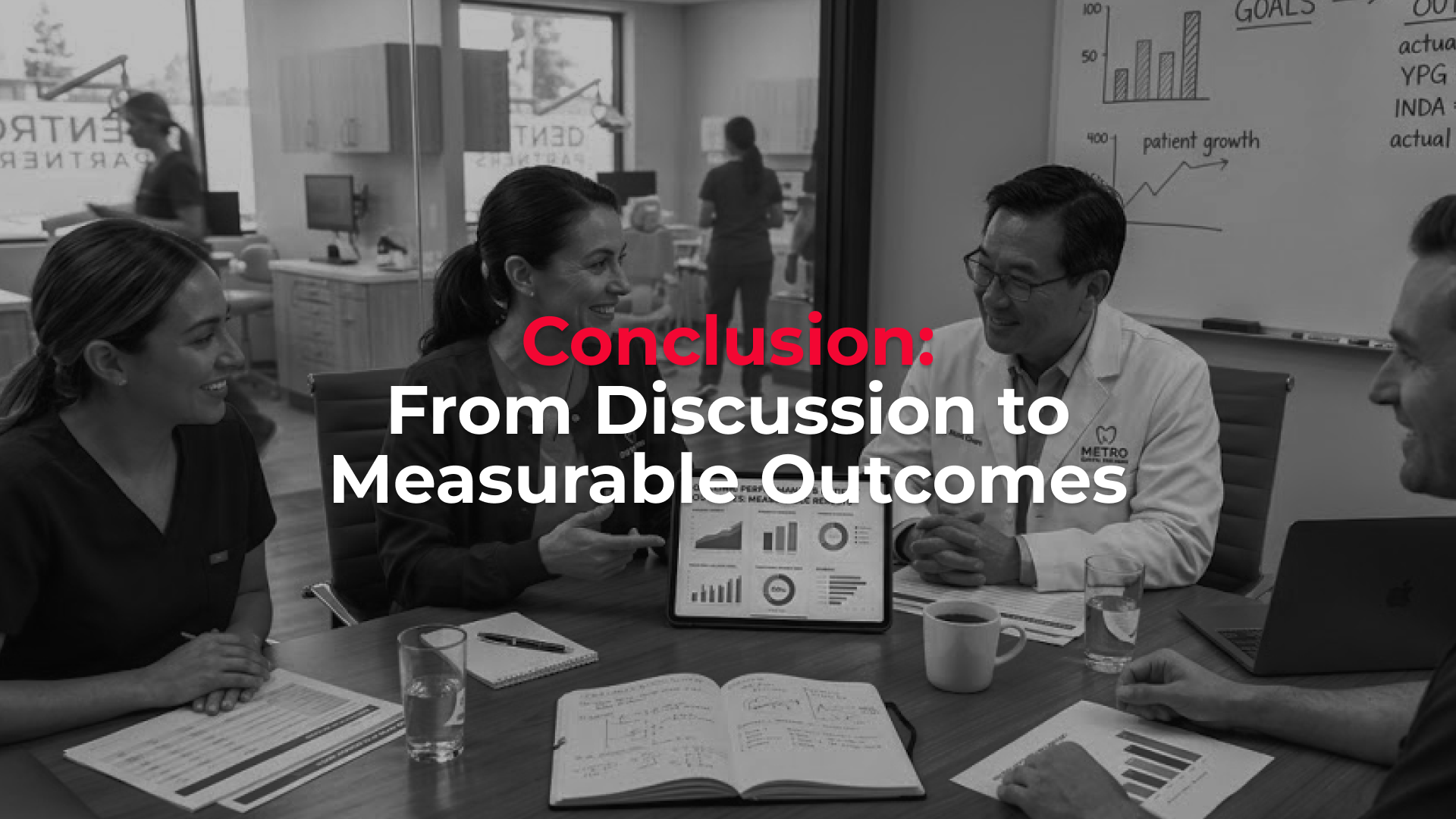 Conclusion: From Discussion to Measurable Outcomes
Running efficient team meetings in a dental practice is not about increasing meeting frequency—it’s about increasing meeting impact.
By focusing on structured agendas, measurable outcomes, and strong accountability, practices can turn meetings into a system that drives real progress.
When meetings are designed effectively, they improve communication, strengthen team alignment, and support better operational decisions—ultimately leading to improved patient outcomes and business performance.
References
- Journal of Dental Practice Management. (2023). Measuring Meeting Effectiveness in Healthcare Teams.
- Dental Economics. (2022). Improving Team Communication and Accountability in Dental Clinics.
- Healthcare Leadership Review. (2021). Operational Clarity Through Structured Meetings.
- Workplace Collaboration Statistics Report. (2026). Team Productivity and Meeting Efficiency Trends.
- Meeting Statistics Report. (2024). Impact of Agendas and Structure on Meeting Productivity.
- Kauffeld, S., & Lehmann-Willenbrock, N. (2012). Effects of Team Meetings on Organizational Success.