Reduce Burnout in Dental Practice Owners | Systems for Efficiency & Work-Life Balance
Learn how to reduce burnout in dental practice owners by improving workflows, delegation, and operational systems to create sustainable growth and better work-life balance.
Reducing Burnout in Dental Practice Owners: Building Systems That Sustain Growth
Burnout among dental practice owners is not just common—it is a growing challenge across the industry. Many owners believe burnout is a personal issue caused by stress or workload, but the reality is different. Burnout in dental practice owners is rarely caused by lack of effort—it is caused by systems that cannot sustain the demands of growth.
Research shows that up to 82% of dentists report significant stress and burnout, highlighting the scale of the issue and the need for systemic solutions.
This highlights a critical shift in perspective: burnout is not a personal weakness—it is a system failure. By improving dental practice efficiency, workflow structure, and operational visibility, practice owners can reduce stress, regain control, and build sustainable growth.
 Overwhelming Workload: When Leadership Becomes Unsustainable
Dental practice owners often balance multiple roles, including clinician, business manager, team leader, and patient experience coordinator. This accumulation of responsibilities creates an unsustainable workload that leads to fatigue and decision fatigue.
Studies show that 58% of dentists experience work-related burnout weekly, emphasizing how workload pressure directly contributes to exhaustion.
For example, an owner managing schedules, billing issues, and patient concerns after clinical hours is operating without sufficient system support. Over time, this constant overload reduces efficiency and increases stress.
The solution lies in redistributing responsibilities through structured workflows and delegation, allowing owners to focus on high-impact decisions rather than routine tasks.
Practices can reduce this burden by focusing on building efficient dental practice systems, allowing leaders to shift from operational overload to strategic decision-making.
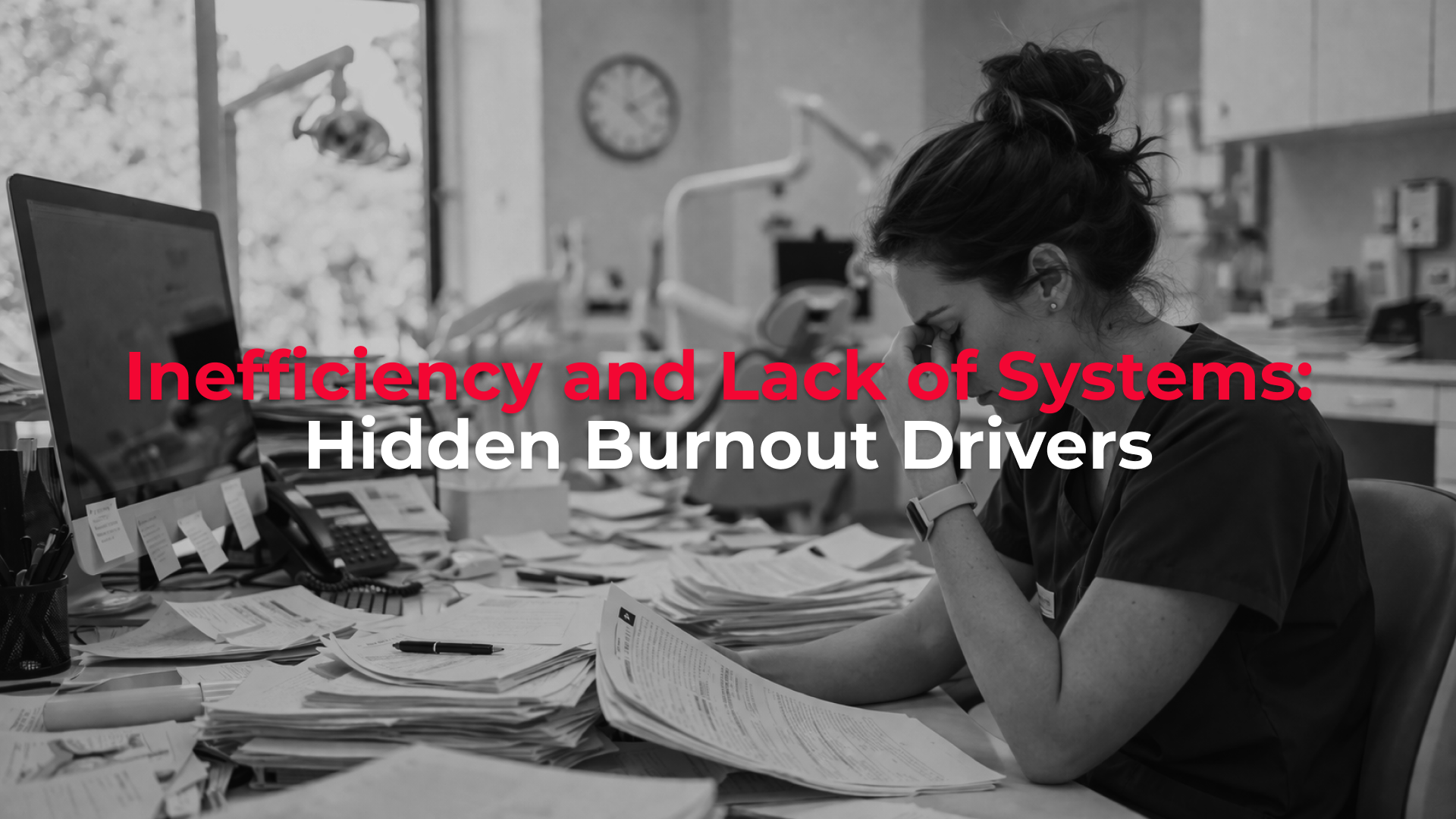 Inefficiency and Lack of Systems: Hidden Burnout Drivers
Inefficient processes are one of the most overlooked causes of burnout. Without standardized workflows, repetitive tasks and manual processes create unnecessary workload and constant interruptions.
Research highlights that burnout in dentistry is strongly linked to workplace factors such as operational inefficiency, time pressure, and poor system integration.
For instance, practices using disconnected systems for scheduling, billing, and communication often experience bottlenecks that require constant intervention. This not only wastes time but also creates frustration and reduces productivity.
Implementing integrated workflows and automation reduces this friction by streamlining processes, minimizing errors, and improving overall efficiency.
Practices can address this by improving structured systems such as closing training and skill gaps in dental teams, ensuring tasks are handled efficiently without constant supervision.
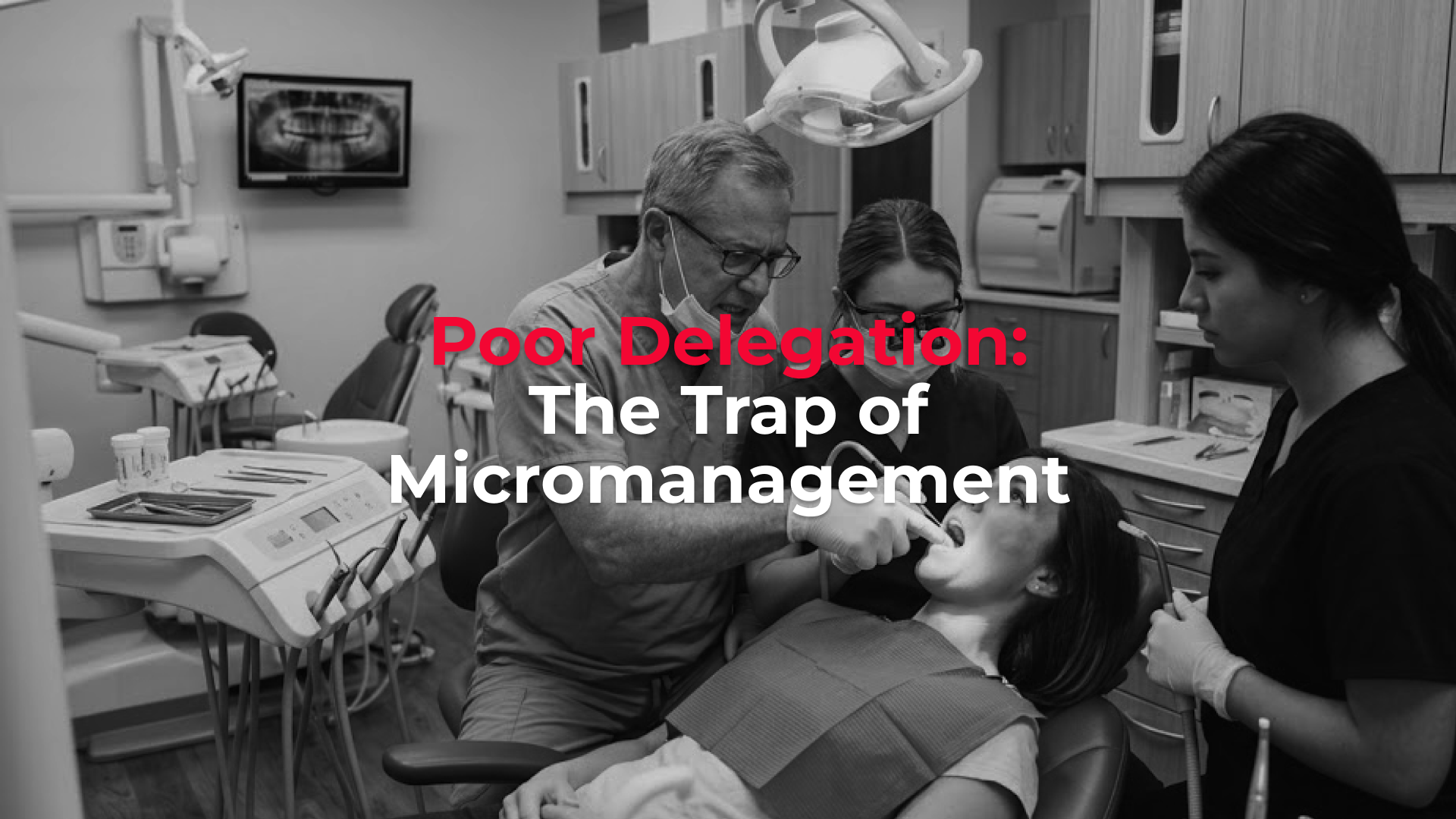 Poor Delegation: The Trap of Micromanagement
Many dental practice owners struggle with delegation, often due to concerns about quality control or lack of trust in team capabilities. This leads to micromanagement, where leaders become involved in every task, significantly increasing their workload.
A strong solution is improving team structure and clarity through systems discussed in improving dental team performance and execution, where defined roles and accountability reduce dependency on leadership.
When teams operate with clarity and ownership, leaders can focus on strategic priorities instead of daily firefighting.
In high-pressure environments like dentistry, excessive workload and lack of delegation are major contributors to burnout and reduced job satisfaction.
Effective delegation requires clear role definitions, training, and accountability systems. When team members are empowered to take ownership of tasks, workflows become more efficient, and leaders can focus on strategic priorities rather than operational details.
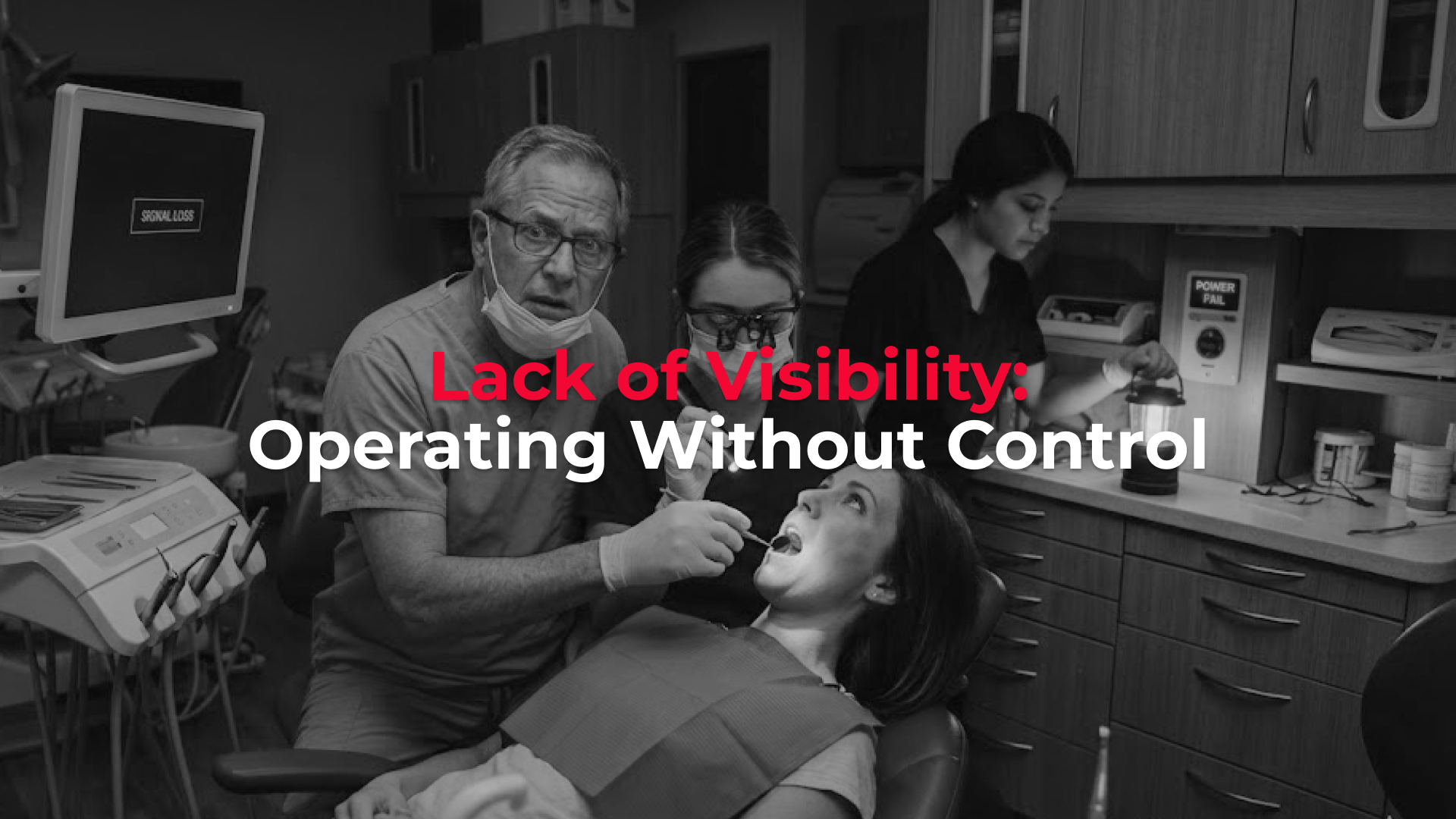 Lack of Visibility: Operating Without Control
A major source of stress for dental practice owners is the lack of real-time visibility into operations. Without clear insights into performance, financial flow, and team productivity, decision-making becomes reactive.
Practices can improve clarity by adopting structured approaches similar to daily performance habits for dental practice growth, where consistent tracking and routines create predictability and control.
This visibility allows leaders to anticipate problems rather than react to them, significantly reducing stress.
Studies show that more than 40% of dentists report feeling defeated or disengaged from work regularly, often due to ongoing stress and lack of control.
For example, discovering financial issues or workflow inefficiencies only after monthly reporting creates unnecessary pressure and limits the ability to respond effectively.
Real-time dashboards and performance tracking systems provide clarity, enabling owners to anticipate challenges, make informed decisions, and maintain operational stability.
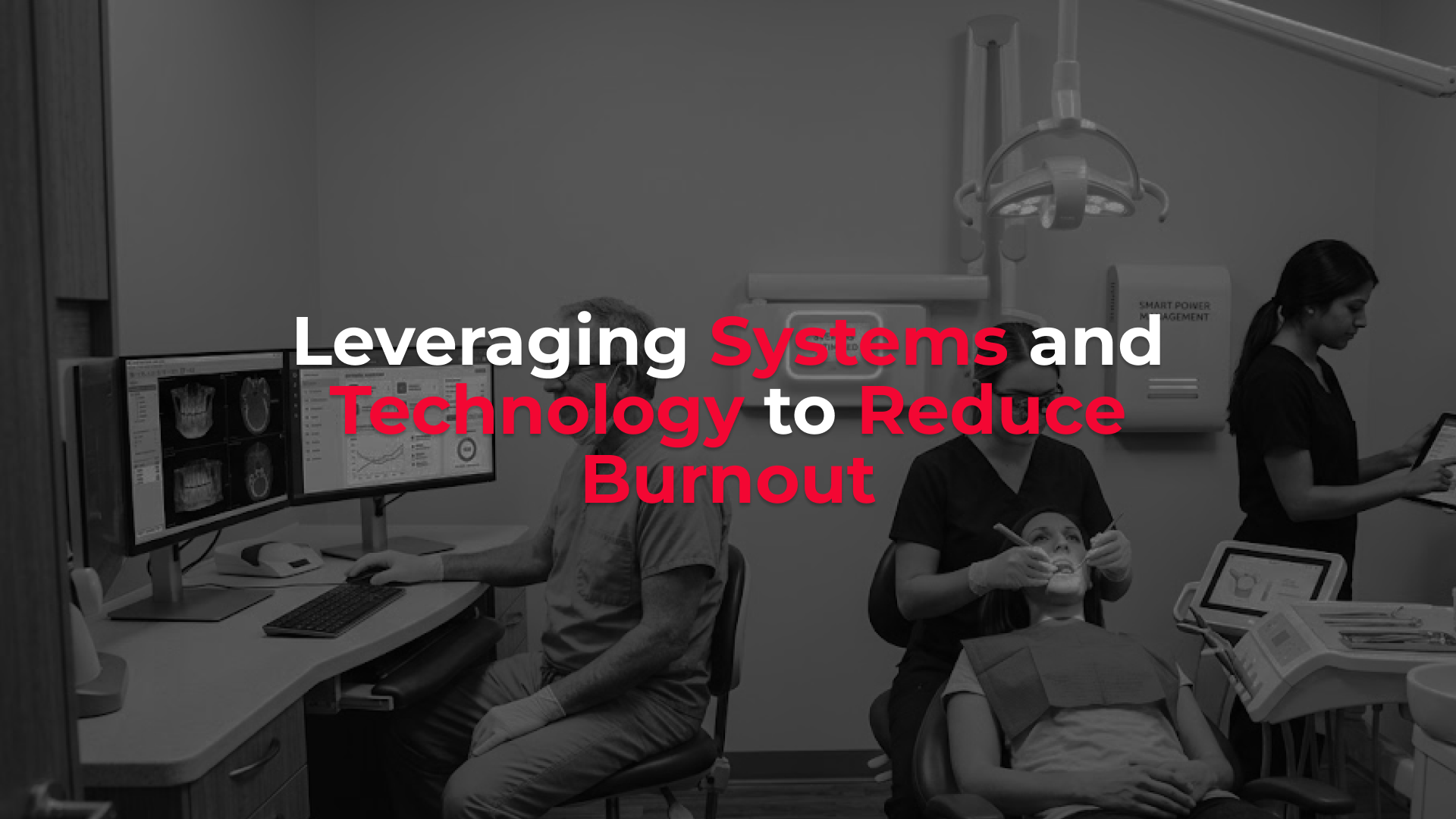 Leveraging Systems and Technology to Reduce Burnout
Addressing burnout effectively requires system-level solutions rather than temporary fixes. Modern dental practices are increasingly adopting integrated systems that combine workflow management, automation, and analytics.
These systems streamline scheduling, billing, patient communication, and performance tracking into a unified platform, reducing administrative workload and improving efficiency.
Research shows that burnout in dentistry is closely tied to workload, time pressure, and inefficient systems—factors that can be significantly reduced through workflow optimization and automation.
By automating routine processes and providing actionable insights, these systems enable practice owners to regain control and focus on growth and patient care.
Practices can also improve overall experience and reduce friction by focusing on creating a patient-centered dental experience, where streamlined communication and workflows reduce pressure on both teams and leadership.
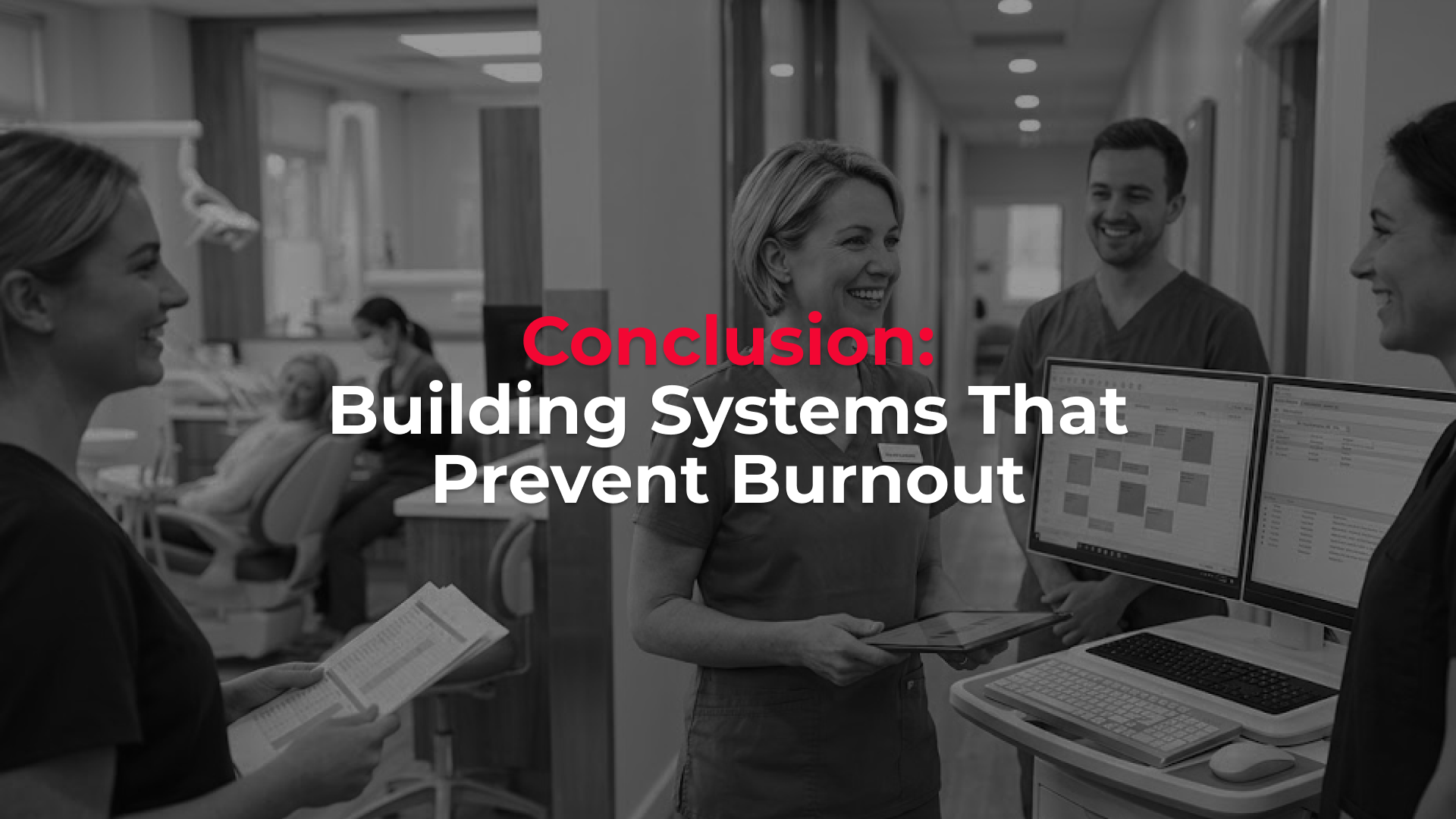 Conclusion: Building Systems That Prevent Burnout
Reducing burnout in dental practice owners is not about managing stress—it is about redesigning systems.
By optimizing workflows, improving delegation, increasing operational visibility, and leveraging technology, practices can create a sustainable environment that supports both performance and well-being.
The most successful dental practices are not those that work harder—they are those that build systems capable of sustaining growth without overwhelming leadership.
When systems are aligned with operational demands, burnout is no longer inevitable—it becomes preventable.
References
- Journal of Dental Practice Management. (2023). Operational Efficiency and Burnout in Dental Clinics.
- American Dental Association. (2024). Stress and Burnout Trends Among Dentists.
- CareQuest Institute. (2023). Burnout Trends in Oral Health Professionals.
- Negucioiu, M. (2024). Burnout Syndrome in Dental Professionals.
- Dental Protection. (2025). Burnout and Mental Wellbeing in Dentistry.